
Claude Code, Codex, and Cursor security without the slowdown
AI coding agents need files, terminals, Git, package managers, and sometimes cloud access. Here is how to keep that power useful without trusting every proposed action.
The best coding-agent security program does not force developers back to autocomplete. It creates hard boundaries, quiet safe paths, and high-signal review for the actions that can damage a machine or business.
Why coding agents feel different
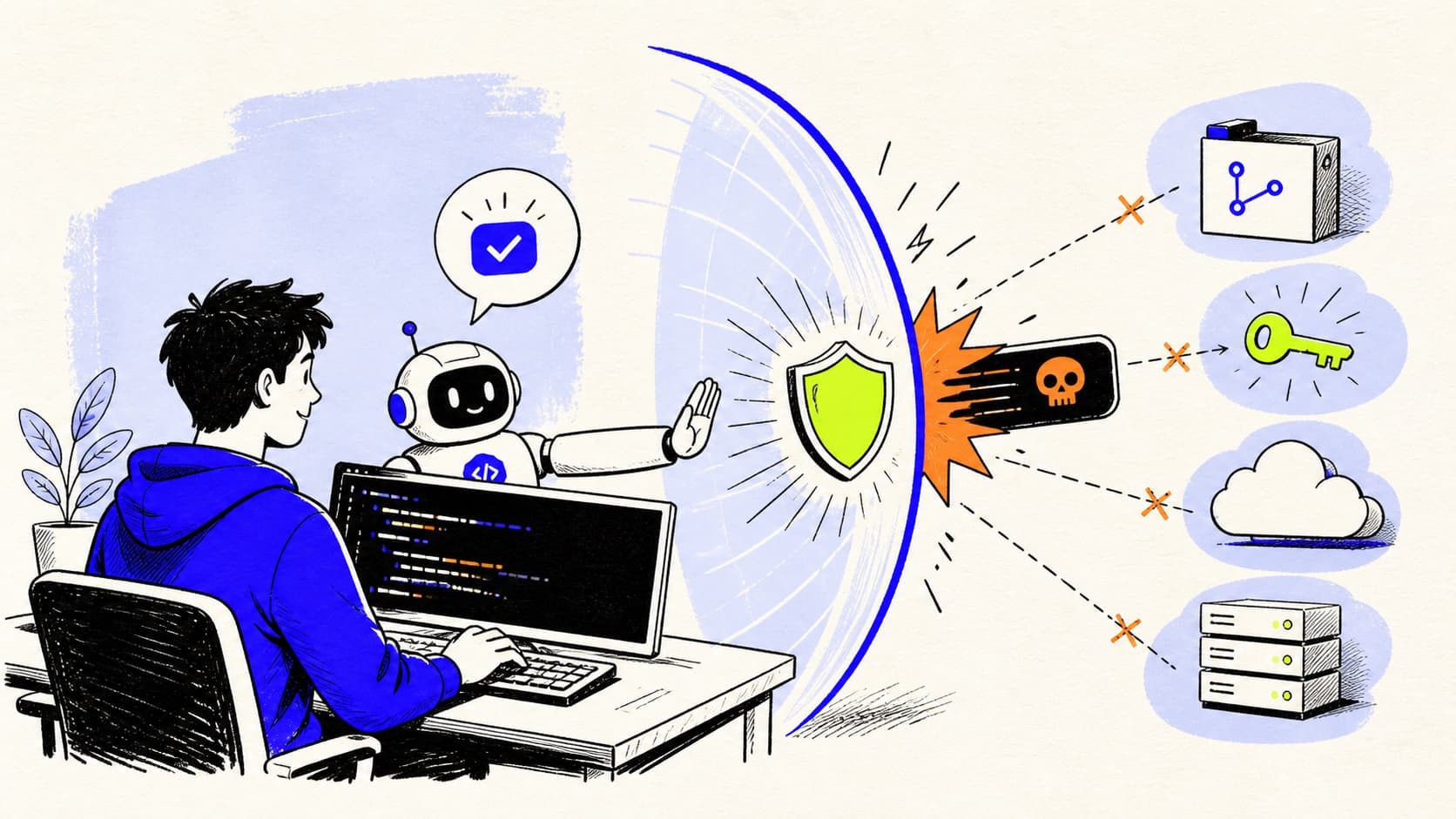
A coding agent is valuable because it can inspect a repository, edit many files, run tests, install dependencies, use Git, and iterate until the task works. On a developer laptop, those tools sit beside SSH keys, cloud credentials, browser sessions, customer data, signing identities, and access to internal services. The repository boundary is not automatically the security boundary.
Vibe coding increases the number of people delegating technical actions they may not fully understand. Experienced developers also move faster and may enable broader autonomy. The risk is not limited to a malicious model. A reasonable instruction, incomplete context, poisoned repository, compromised package, or copied prompt can produce a destructive sequence from an otherwise capable agent.
Know the native boundaries of each tool
Modern coding agents include important safeguards. OpenAI describes Codex as constrained by configurable sandboxing and permission requirements for elevated network actions. Anthropic has documented filesystem and network isolation for Claude Code, along with the risks of approval fatigue. Cursor documents different security properties for local and background agents, including the fact that background agents can auto-run terminal commands and may have internet access.
These controls should remain enabled and carefully configured. They are also product-specific. A company that uses several agents still needs a consistent answer for secrets, destructive commands, hidden instructions, risky outbound actions, and approvals. Native controls are the first layer, not a reason to ignore the gaps between products.
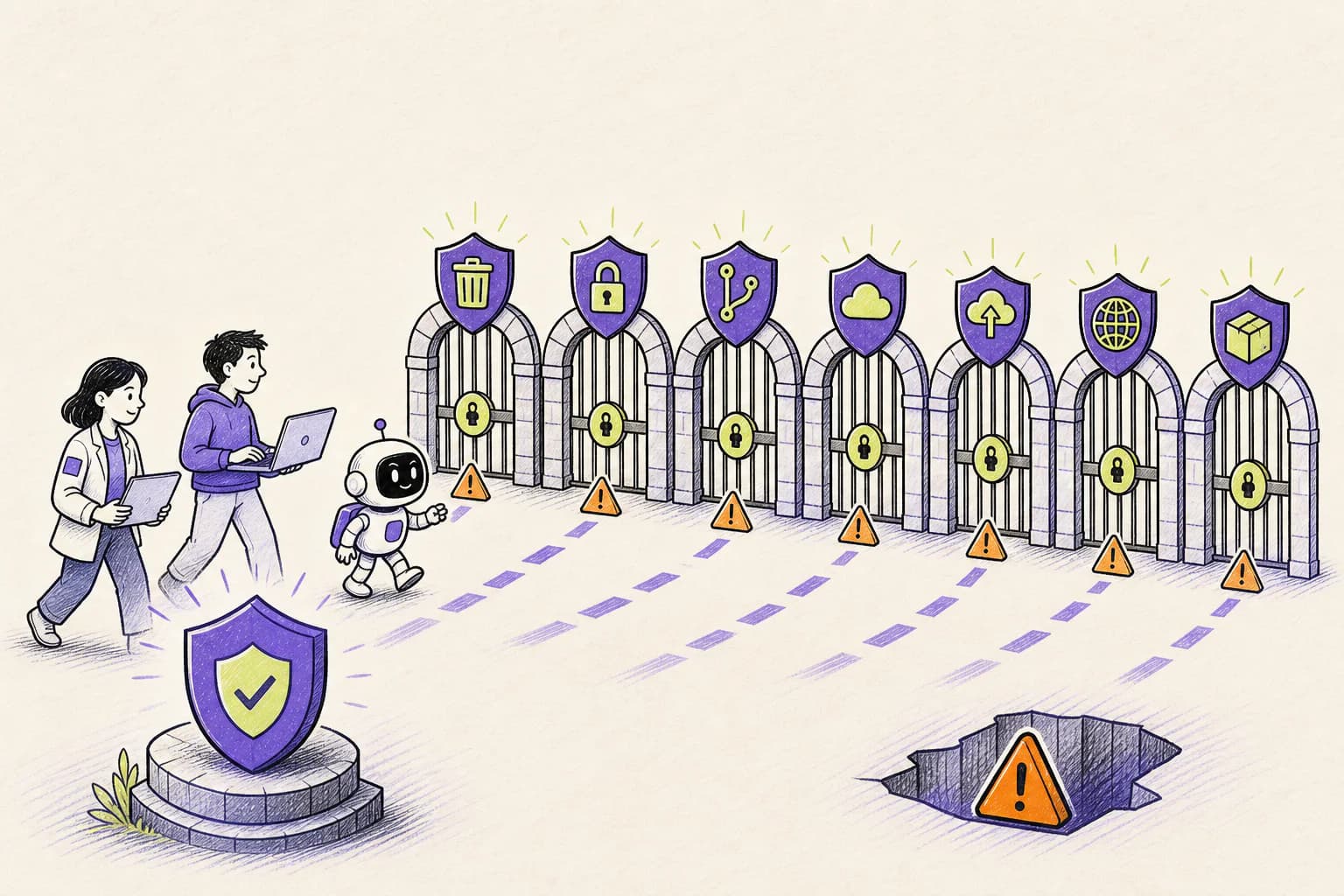
The seven actions to protect first
Start with the operations that combine high reach and poor reversibility. These are easy for developers to recognize and produce immediate value from enforcement. A safe test run should not feel like a production database change, and a local file search should not receive the same friction as reading a private key or publishing a release.
Pay special attention to commands launched indirectly. Package scripts, build tools, repository automation, MCP servers, and downloaded software can execute code with the agent's access. Reviewing only the visible command is not enough when that command hands work to untrusted software with broader permissions.
- Recursive deletion, destructive database operations, and irreversible infrastructure changes
- Reads from home-directory secrets, environment files, keychains, SSH, and cloud credentials
- Network uploads, automated outbound requests, package downloads, and unapproved external destinations
- Git force pushes, branch deletion, release publication, and changes to protected workflows
- Cloud CLI, Kubernetes, Terraform, database, and deployment commands
- Bulk edits outside the intended workspace or project root
- Disabling safeguards, skipping permissions, or changing agent policy files
Prompt injection can arrive through code
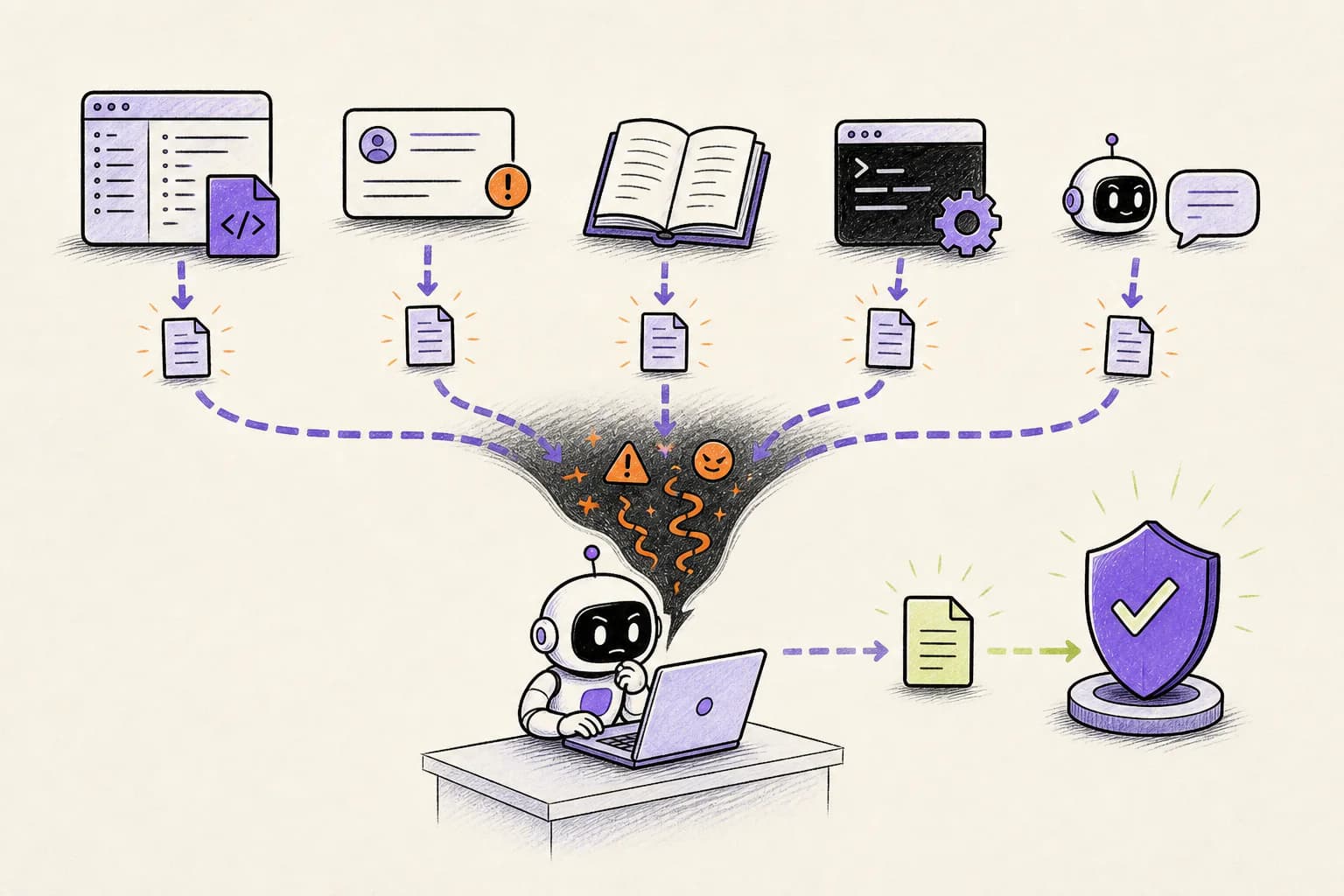
A README, issue, test fixture, generated log, dependency documentation, or agent instruction file can contain language that changes the agent's behavior. The content does not need to exploit a parser. It only needs to be interpreted as a more important instruction than the user's goal. That is why repository content should be treated as untrusted input when it can influence tool use.
Anthropic has described vulnerabilities around configuration processed before a folder trust decision and a red-team prompt that attempted to read and transmit cloud credentials. The durable lesson is broader than one vendor: trust decisions must happen before project-local configuration executes, and an agent should not be able to combine sensitive reads with arbitrary outbound network access without a strong control.
Design a fast developer policy
A developer policy should grant autonomy inside a safe workspace while escalating actions that cross a real boundary. Allow ordinary reads, edits, tests, and local builds in the project. Restrict writes outside it. Limit network destinations. Keep production credentials out of the agent environment. Require clear review for destructive commands, releases, production changes, and external data transfer.
Avoid blanket allowlists for shells, script interpreters, and package runners. A command name is not the consequence. Evaluate arguments, paths, destination, environment, and context. Provide the reviewer with a short explanation of what will change and whether it can be undone.
How OpenLeash protects coding agents
OpenLeash connects to the selected agent and starts checking its actions. It can block destructive commands, protect secrets before exposure, reject hidden instructions, and apply selected project rules. OpenLeash bases protection on what it can actually stop, not on a promise attached to the agent's brand.
When a decision needs a person, OpenLeash shows the exact request on desktop, web, or optional mobile. Safe work continues quietly, while high-impact actions arrive with enough context to decide. Personal Open Source keeps protection, settings, approvals, and history on the user's computer. OpenLeash Cloud provides a managed experience for individuals or businesses.
A rollout developers will accept
Begin with a small group using real repositories, not a synthetic demo. Run monitoring first and identify the actions that are common, safe, noisy, or dangerous. Turn on blocking for the clearest destructive patterns, then add secrets and outbound controls. Review overrides with developers every week until the policy is predictable.
Success is not the number of prompts shown. Measure avoided high-impact actions, secrets kept out of context, approval rate by action class, time to decision, overrides, and developer interruptions. The goal is a safer autonomous workflow with less babysitting, not a new source of security pop-ups.